
Online EMDR for Anxious Attachment in Florida & Tennessee
You love deeply, but you’re exhausted from constantly asking and thinking , "Are you mad at me?"
Finally move from the panic of needing reassurance and wondering if you’re “too much” to feeling secure within yourself.
A spiritually-integrated approach to therapy for reclaiming your voice and honoring your needs.
Signs You’re Struggling with Anxious Attachment
You know the cycle:
The Emotional Audit: You don't just walk into a room; you scan it. You’re mentally mapping out your partner’s unspoken frustration, your boss’s clipped tone, or your friend's sudden distance. You’re a detective for danger, checking everyone's pulse before you even decide if you are allowed to be okay.
The One-Track Mind: Once you spot a "glitch" in the connection, you can’t look away. You zoom in on that one sharp comment or late reply until it’s all you can see. Even if the rest of the day was perfect, your brain filters out the wins and stays locked on the one piece of evidence that says you’re losing them.
The Architect of Change: You’re convinced that if your partner would just text more or change their tone, you would finally be "fine." You try to manage their behavior because you believe their consistency is the only thing keeping you from drowning. You do this at work, too by over-functioning and triple-checking everyone so no one can mess up and leave you exposed.
The Master of Adaptation: You try to fix the "problem" by erasing yourself. You try to be more "chill," less needy, or a more "perfect" version of yourself to guarantee the connection stays. You’re the "no-maintenance" friend and the employee who never asks for a raise because you’re terrified that asserting your worth will cost you your seat at the table.
Constantly Feeling Unheard (No Matter What): Because you chronically feel unseen or unheard, you find yourself repeating the same things over and over. You’re not trying to nag; you’re trying to be witnessed. You loop through the same arguments and the same explanations, hoping that this time, the message finally lands and the distance between you closes.
The Mental Loop: You find yourself replaying conversations over and over, looking for where you went wrong. The "what-ifs" start looping: What if I said the wrong thing? What if they’re losing interest? What if I’m finally too much for them?
The Reassurance Trap: You ask, “Are we good?” “Are you mad at me?” or “Did I do something?” just to hear the words, but the relief is short-lived. Within twenty minutes, the "what-ifs" start crawling back in and you want to ask again.
The Protest Behavior: You get pushed to a breaking point where you pick a fight or act cold just to get a reaction (literally any reaction) because even an argument feels safer than the terrifying silence of being ignored.
The "Too Much" Shame: You have real needs, but the second you express them, you’re flooded with guilt. You apologize for your feelings before they’ve even finished leaving your mouth.
Whether you’re trying to control the room or disappear into it, the root is the same: You don't feel safe unless the connection is "perfect.
You’re the one who notices the shift in the air before they even realize they’re in a bad mood. You’ve already dissected the three-word text, the missing emoji, and the way they didn't quite catch your eye when they walked through the door. “Are you mad at me?” is the question that you constantly double check.
You’ve been told you’re "too much," "too sensitive," or "dramatic." But the truth is, your nervous system is just performing a high-stakes audit. You’re not trying to be difficult, you’re trying to survive the feeling that the floor is about to drop out from under you.
Understanding the "Hyper-Vigilant Child" & Anxious Attachment
Before you were the "anxious partner," you were likely the "Hyper-Vigilant Child."
If you grew up with emotionally immature parents or caregivers whose presence was a moving target—sometimes warm, sometimes distracted, sometimes volatile—you learned early on that connection wasn't a given. It was a prize to be managed.
You became an expert at reading the subtle shift in the household air. You learned that being "the easy one," "the helper," or "the quiet one" was the only way to keep the peace. You weren't allowed to just be; you had to be the "Little Adult" who could anticipate everyone else's needs to ensure your own safety.
Now, your nervous system still thinks it’s 7 years old, trying to secure connection in an unpredictable world. EMDR helps your body realize the emergency is over.

How We Work Together: Somatic Therapy & EMDR for Anxious Attachment
In this space, we don't just give you "tips" on how to stop double-texting or dissect what your partner is doing “wrong.” We work with the root of the panic: the part of your nervous system that defaults to the search for a "safe signal."
Somatic Awareness: We find where that "rejection spike" lives in the tightness in your throat, the fluttering in your stomach, or the heat in your chest. We teach your body how to ground itself so you don't have to spiral every time a text is left on read or you hear “we need to talk.”
Parts Work: We get to know the Inner Protector that thinks your survival depends on being liked. We meet that part with compassion, not judgment, so it can finally stop the exhausting work of monitoring everyone else's pulse to ensure your own safety.
EMDR for Attachment Wounds: We reprocess the specific memories of being dismissed, left, or made to feel like you were "too much." We target the beliefs that say “Someone is mad at me,” “I’m alone,” “People always leave me,” and replace it with a felt sense of: "I am solid. I am safe. I am enough."
Curious about how EMDR helps shift these deep-seated patterns?

"My partner isn't that bad... maybe I'm just the problem. Maybe I’m too much and needy?"
This is the thought that keeps you stuck in the loop. You think if you could just be less "needy" or more "chill," the relationship would finally feel secure.
But if you grew up in a home where your needs were a burden, your nervous system learned that your only value was in how little space you took up. You don't need a "big enough" story to deserve healing. You just need to be tired of the panic.
Anxious attachment often creates a "noise" that drowns out your own intuition. We use spiritual practices to quiet that noise so you can hear your own Truth again.
Root Chakra (Your Foundation): We move from the frantic energy of searching for a home in someone else to finding a home within your own skin. You learn to trust that the ground won't disappear the moment a connection feels shaky.
Solar Plexus (Your Identity): We move from self-abandonment to self-sovereignty. You learn that your worth isn't tied to your relationship status or someone else's approval.
Heart Chakra (Your Connections): We move from a place of desperate fear to open, secure connection. You learn to give because you want to, not because you’re afraid of being left.
Throat Chakra (Your Voice): We reprocess the times you were silenced. You find the words to ask for what you need without the 500-word preamble or the compulsive apology.
Where Attachment Healing Meets Your Spirit
You may imagine that becoming more secure means either your partner is either doing things differently or you change everything about yourself. Healing from anxious-attachment looks like:
The "Text Spiral" stops. You see a message is left on "Read" and you don't spend the next three hours wondering what you did wrong. You just... go back to your day.
The "Scanning" finally ends. You no longer enter a room and immediately try to calculate everyone’s mood. You realize that other people’s emotions are their responsibility, not your fire to put out.
A "No" that feels solid. You find the words to set a boundary without the "Conflict Hangover" or the three-day guilt spiral.
Reclaiming your energy. You stop the mental rehearsals and the constant over-functioning. You finally belong to yourself.
Ultimately, you stop looking for a "safe signal" from the world and finally feel secure in who you are.
What an “Earned Secure Attachment” feels like:

Hi, I’m Sabrina, a therapist and recovering “reassurance-seeker”
I don’t just know the clinical definitions of fawning and over-functioning; I know exactly what it feels like to live them.
I know the heavy, sinking feeling in your chest when you realize you’re "performing" for love or trying to control it to keep from drowning.
I’ve been the "easy" one, the "fixer," and the "quiet" one. It took my own journey through somatic work and deep relational healing to realize that my "kindness" (and my control) was actually a shield. Now, I use my clinical training and my lived experience to help you navigate your way back to yourself.
I’m not here to just give you "coping skills" from a textbook. I’m here to sit with and guide you as you learn to take up space, speak your truth, and finally feel secure in yourself.

Take the Next Step: Begin Online EMDR Therapy in Florida and & Tennesee

Ready to stop performing and start living I know even booking a call feels like "taking up too much space." You’re likely already scripting what you’re going to say so you don’t sound like a burden.
This is just a safe space for us to connect. You don’t need a perfectly polished list of goals or a "bad enough" story. You can just show up and say, "I’m exhausted and I don't know how to stop." That is a perfect place to start.
1. Schedule Your Free Consultation
We'll spend 15-20 minutes talking about what you're struggling with, what you're hoping to heal, and whether my spiritually-integrated approach to EMDR feels like the right fit. This is your chance to ask questions, get a feel for how I work, and see if we're a good match—no pressure, no commitment.
2. Begin Your Healing Journey
If we decide to work together, we'll schedule your first session where we'll dive deeper into your history, identify what we want to target in EMDR, and start building the foundation for your healing. I'll make sure you have the resources and tools you need to feel safe throughout the process.
3. Experience Transformation
As we work through EMDR sessions—combining reprocessing with Reiki, energy work, and somatic practices—you'll start noticing shifts. Less anxiety before difficult conversations. More confidence in your decisions. Easier boundaries. A quieter inner critic. Deeper trust in yourself and your intuition.
You deserve therapy that honors all of you—your psyche, your body, your energy, your spirit. Whether you're in Miami, Coral Gables, Nashville, Knoxville or anywhere across Florida & Tennessee, virtual EMDR therapy means you can access this deeply integrated healing from wherever feels most comfortable.
You’ve spent your whole life taking care of everyone else. It is finally time to put yourself on the list.
Common Questions: EMDR for Anxious Attachment in Florida & Tennessee
-
This "rejection sensitivity" is a hallmark of anxious attachment. If you grew up with emotionally immature parents whose moods were unpredictable, your nervous system became an expert at "scanning" for the slightest shift in tone or body language to stay safe.
In therapy, we identify this as a hyper-vigilant nervous system. EMDR helps you reprocess those early "danger signals" so you can stop living in a state of constant emotional audit and start feeling steady, even when someone else is having a bad day.
EMDR helps you reprocess those early "blueprints" so you can stop living in a state of hyper-vigilance and start prioritizing your own well-being without the crushing guilt.
Note: These descriptions are frameworks to help you feel seen, but they aren't 'rules.' There are individual nuances to every story that may not be reflected here. In our work together, we prioritize your specific lived experience over any textbook definition, diagnosis, or patterns.
-
es. Anxious attachment often feels like a broken record—you ask "Are we okay?" but the relief only lasts for a few minutes before the "what-ifs" return. This isn't a lack of willpower; it’s an attachment wound stored in your body.
EMDR targets the specific memories of being dismissed or left alone with big feelings. By reprocessing these, we "unhook" the panic response.
Combined with Solar Plexus (power) and Root Chakra (safety) work, you can move from a desperate need for a "safe signal" to a solid internal foundation of earned security.
-
For those struggling with anxious attachment—characterized by a constant need for reassurance, a deep fear of abandonment, and compulsive people-pleasing—a "bottom-up" approach like EMDR is often the most effective.
While traditional talk therapy primarily addresses your thoughts, EMDR and somatic work go deeper to address the attachment wounds held in the body's nervous system. These patterns aren't just "habits"—they are survival strategies. I provide virtual therapy across Florida (serving Miami, Brickell, Coral Gables, Orlando, and Tampa) and Tennessee (serving Knoxville, Chattanooga, and Nashville) specifically for "high-achievers" and sensitive souls who are ready to stop "scanning" for rejection and finally start building a secure internal foundation.
-
No. Many people don't have a single "big-T" event. Instead, they have a lifetime of "little-t" relational trauma: walking on eggshells, being the "easy child," or feeling responsible for a parent’s happiness.
If your current relationships are defined by a fear of being "too much" or a constant need to fix the vibe, your nervous system is likely stuck in a trauma response. EMDR is highly effective for clearing these chronic patterns of emotional neglect.
-
Traditional EMDR is great for desensitizing memories, but spiritually-integrated EMDR adds the missing pieces: your energy system and somatic intuition.
We don't just talk about your anxiety; we track where it lives in your body.
We use Chakra work, Reiki, and meditation to help you reclaim the parts of yourself you gave away to keep others happy.
If you are a yoga practitioner or someone drawn to holistic healing, this approach bridges the gap between clinical science and soulful wellness.
-
Many clients notice shifts within 3-6 sessions of EMDR reprocessing—less anxiety, easier boundaries, more confidence. For complex patterns like growing up with emotionally immature parents, expect 6-12 months or longer for deeper healing.
EMDR often works faster than traditional talk therapy because we're healing the root of the "fawn" response rather than just managing the symptoms week after week.
-
Absolutely. If you feel chronically unseen, you likely repeat yourself or "get big" in arguments just to be heard. This is a protest behavior born from attachment panic.
EMDR helps reprocess the original experiences where your voice didn't matter. When your nervous system finally feels "seen" by you, the frantic need to force your partner to understand you begins to dissolve, making room for actual, calm communication.
-
Yes. Research shows online EMDR is just as effective as in-person treatment. For clients across Florida and Tennessee—especially those with demanding schedules in cities like Miami or Nashville—virtual therapy offers crucial flexibility. Healing in your own space can actually enhance your sense of safety, which is vital when we are teaching your nervous system that it is finally safe to be "you."
-
When searching for an EMDR therapist in Florida, look for someone who understands the intersection of attachment theory, Adult Children of Emotionally Immature Parents, complex trauma, and relational anxiety.
Whether you’re in Miami, Brickell, or Tampa, seek a clinician who doesn't just "do EMDR" but specializes in Somatic and Holistic healing if you want a deeper mind, body, and spirit connection.
I offer virtual, spiritually-integrated EMDR across Florida for high-achieving women who are tired of the "reassurance trap" and ready for self-sovereignty.from "fawning" to genuine self-sovereignty.
-
To find the right EMDR therapist in Tennessee, look for a provider who understands the "secretly exhausted" professional. In cities like Knoxville and Nashville, many women are the "reliable ones" who take care of everyone else while their own hearts are in a constant state of panic.
I provide specialized virtual EMDR for Tennessee residents, blending parts work, somatic awareness, and chakra healing to help you stop walking on eggshells and start standing in your own power.
Before You Reach Out, Know This:
I know reaching out feels vulnerable. I know part of you is probably already rehearsing what you'll say in that consultation call, worried about taking up too much space or being "too much."
Here's what I want you to know:
✨ You don't have to perform here
✨ You don't have to have your story perfectly organized or your emotions neatly contained
✨ You can show up anxious, uncertain, still figuring things out—that's exactly where healing begins
✨ Your struggles are valid—even if they don't look like "typical trauma"
✨ You're not "too sensitive"—you're appropriately responding to what you experienced
✨ Asking for help isn't weakness; it's wisdom
You've spent long enough putting everyone else first. This is your permission to finally put yourself on the list.And I can’t wait to meet you.

Ready to take the next step?
Book your free 15-minute consultation to see if we're a good fit for your healing journey. Virtual EMDR and holistic trauma therapy for adults across Florida and Tennessee.
Now accepting virtual therapy clients across Florida (Miami, Orlando, Tampa) and Tennessee (Knoxville, Nashville, Chattanooga)
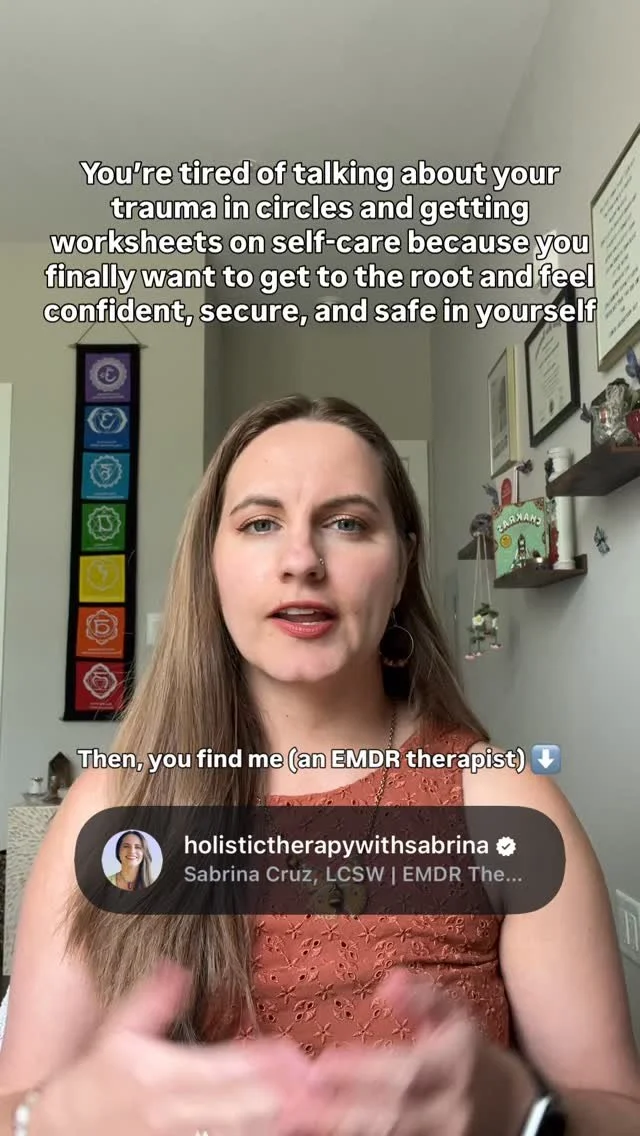
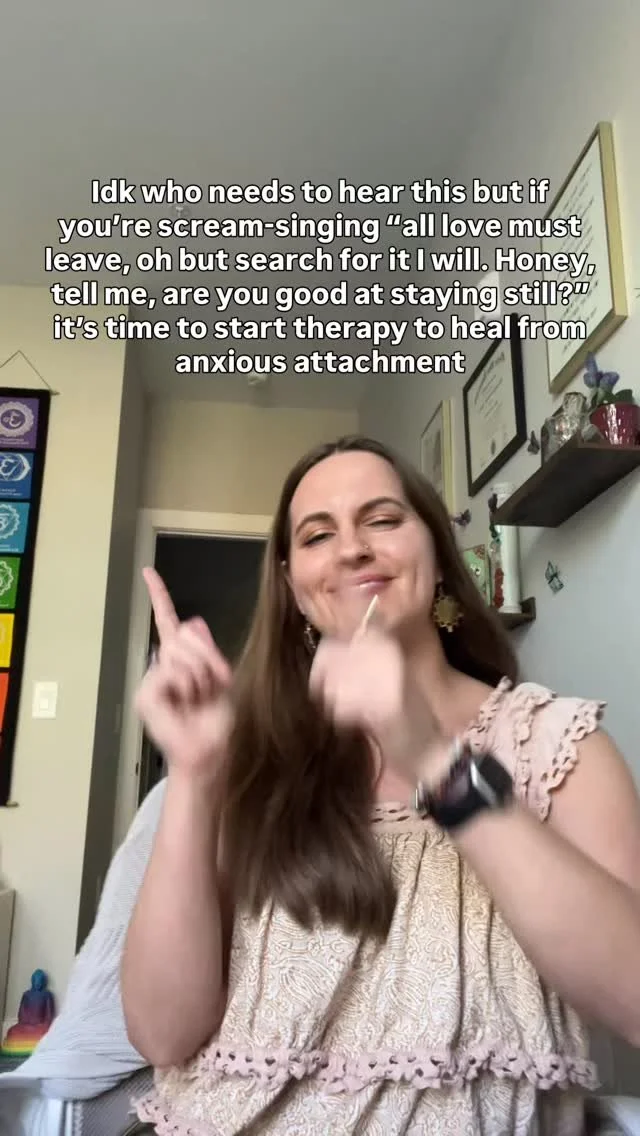
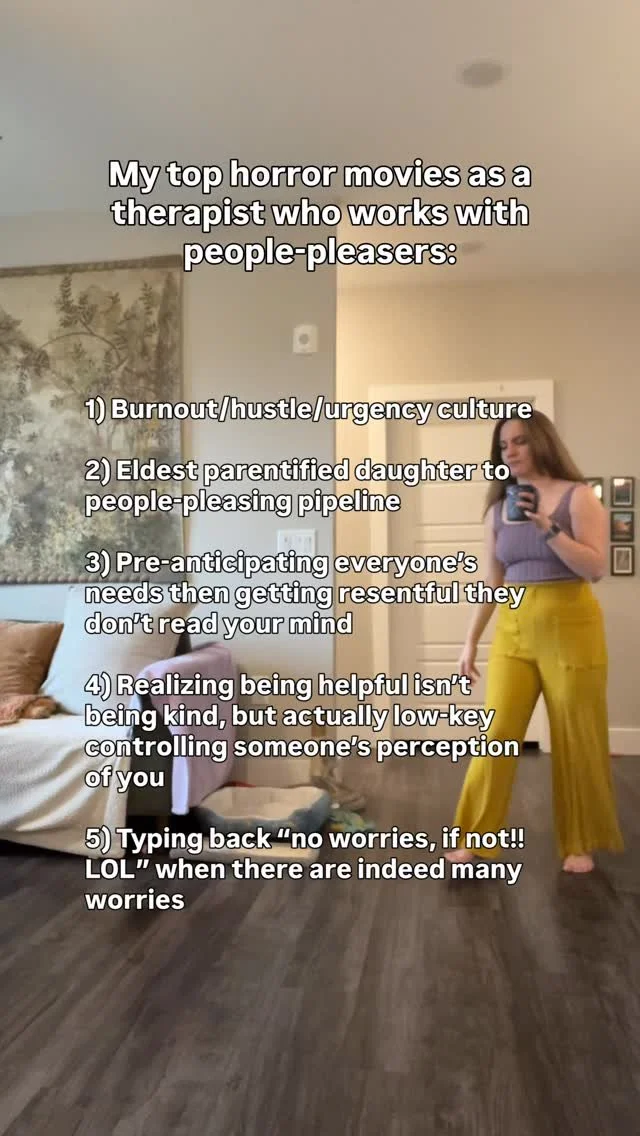
Get to Know Me Better on Instagram

Instagram is not a replacement for mental health advice.