Online EMDR for Adult Children of Emotionally Immature Parents (EIP) in Florida & Tennessee
You can love your parents and still be exhausted by the role you have to play for them.

You’ve always been the "easy" one. The one who didn't cause trouble, who kept things moving, and who knew exactly how to navigate your parents' moods before they even walked through the door. Whether you were their go-to sounding board or the trophy they used to validate their own image, you learned early that your job was to keep them stable.
Now, you’re exhausted. You’re the person everyone relies on, but you have no idea how to stop without feeling like you're failing or being "selfish."
Heal from the childhood that looked “good” on the outside but felt lonely AF on the inside.
Signs You’re Struggling As An Adult Child of Emotionally Immature Parents (EIP)
You know the feeling—the immediate drop in your stomach when a text comes in, or the way you start rehearsing your "excuses" days before a family event. You’ve spent your life monitoring everyone else's face for the slight shift that means someone is upset, and you’ve gotten so good at it that you've lost track of what you actually want.
That stomach-knot isn't a personality trait.
It’s your nervous system still trying to protect you from the volatility you grew up with. You were taught that being "good" meant being whatever they needed you to be, but it never actually felt like you were allowed to be real.
The Performance of Survival
Growing up with an emotionally immature parent means your childhood was a high-stakes performance. You weren't allowed to just be; you had to be a solution to their problems. If you're wondering why you feel so disconnected from yourself now, it’s because you spent years playing a part just to stay safe.
Do you recognize yourself in these roles?
-
They told you that you were their "person." They dumped their relationship stress, marriage problems, and adult secrets on you because you were "so mature." You weren't a child; you were their emotional crutch. You learned that love is a transaction: you listen, you fix, and in exchange, you get to stay close.
-
Your parent is your biggest fan (but only when you’re making them look good.) They brag about your "wins" to the world, but in private, they tear you down or question your choices. Your success belongs to them, but your actual feelings are an inconvenience to the family image.
-
If the family was stressed, it was somehow your fault. You were the "difficult" one or the one who "just couldn't let things go." You were the lightning rod for their unhealed trauma. Now, you’re an adult who over-explains every intention because you’re always waiting for the blame to land on you.
-
Because the house was already full of their drama, you decided to take up zero space. You became the high-achiever who didn't cause trouble. You learned to be a ghost in your own home to avoid being "one more thing" for them to deal with, while secretly wondering when someone would finally show up for you.
-
You were the house's human shock absorber. You learned to read the slight shift in their jaw or the tone of their voice from two rooms away. Your job was to soothe or crack a joke to keep them from exploding. You’re an expert at "vibing" a room, but you’re structurally exhausted from the constant scanning.
-
You were the "good" one used to prove the family wasn't broken. This role feels safe until you realize you aren't allowed to have a "messy" emotion without it being seen as a betrayal. Now, your anxious attachment flares up the second you feel like you aren't being "perfect" for your partner
You probably recognize yourself in three or four of these roles.
That’s because when you grow up with an EIP, you don’t just get one role. You get a rotating shift. You’ve spent your life shapeshifting to fit the gaps they left behind. In our work together, we stop the performance.
When "Doing Their Best" Still Left You Harmed
You’ve probably spent a lot of time justifying why your childhood wasn't "that bad." Your parents likely did the absolute best they could with the tools they had. They may have survived their own unhealed traumas just to give you the life you have now.
But their "best" still left you in survival mode.
It is possible to honor their sacrifices and love them deeply while also admitting that walking on eggshells for twenty years affected you deeply. You don't have to "blame" them to acknowledge that your nervous system is exhausted.
EMDR isn't about making them the villain; it’s about updating your brain so it finally knows that the childhood danger has passed.

Updating the Hardware: EMDR Meets Spirituality
What most therapy skips is that your people-pleasing and self-doubt aren’t just habits—they’re how your body learned to feel safe. Traditional talk therapy helps you understand the "why," but it doesn't stop the stomach-flip you feel when you see their name on your phone.
We work with the software, not just the story. We use EMDR and somatic therapy to target the specific "snags" in your nervous system. As a Licensed Clinical Social Worker and Reiki Master, I blend clinical trauma healing with spiritual practices. We explore how these childhood roles have snared the flow of your energy.
Where Healing From Emotionally Immature Parents Meets Your Spirit

As a Licensed Clinical Social Worker and Reiki Master, I blend clinical trauma healing with spiritual practices. We explore how these childhood roles have snared the flow of your energy, so that can finally start living for yourself.
Root Chakra (Safety): Move from the frantic energy of searching for safety in their approval to finding a home within your own skin.
Solar Plexus (Identity): Move from self-abandonment to self-sovereignty. Your worth isn't tied to being their "fixer" or their "trophy."
Throat Chakra (Voice): Reprocess the times you were silenced or dismissed. Find the words to set a boundary without the "Conflict Hangover."
The “Boring Wins” of Healing from Emotionally Immature Parents
You may imagine that becoming more secure means either your partner is either doing things differently or you change everything about yourself. Healing from anxious-attachment looks like:
The Text Message Shift: They send a passive-aggressive text and you just feel a slight annoyance, put the phone down, and move on.
The Justifications Drop: You say "no" to a request and don't follow it with a 500-word explanation. You stop apologizing for having needs.
The Somatic Release: The chronic tension in your jaw and the "scanning" in your chest finally starts to soften. You can take a full breath without it catching.
Trusting Your Gut: You stop needing constant reassurance from others because you finally trust your own perception of reality.
Ultimately, you stop looking to them for approval and finally feel secure in who you are.

Hi, I’m Sabrina, a therapist and recovering "Little Adult."
I don’t just know the clinical definitions of fawning and parentification; I know exactly what it feels like to live them. I’ve been the "easy" one and the "fixer."
It took my own journey through somatic work and deep relational healing to realize that my "kindness" (and my control) was actually a shield. Now, I use my clinical training and my lived experience to help you navigate your way back to yourself.
I’m not here to give you "coping skills" from a textbook. I’m here to sit with you as you learn to take up space and finally feel secure in yourself.
Take the Next Step: Begin Online EMDR Therapy in Florida and & Tennesee

Ready to stop performing and start living I know even booking a call feels like "taking up too much space." You’re likely already scripting what you’re going to say so you don’t sound like a burden.
This is just a safe space for us to connect. You don’t need a perfectly polished list of goals or a "bad enough" story. You can just show up and say, "I’m exhausted and I don't know how to stop." That is a perfect place to start.
1. Schedule Your Free Consultation
We'll spend 15-20 minutes talking about what you're struggling with, what you're hoping to heal, and whether my spiritually-integrated approach to EMDR feels like the right fit. This is your chance to ask questions, get a feel for how I work, and see if we're a good match—no pressure, no commitment.
2. Begin Your Healing Journey
If we decide to work together, we'll schedule your first session where we'll dive deeper into your history, identify what we want to target in EMDR, and start building the foundation for your healing. I'll make sure you have the resources and tools you need to feel safe throughout the process.
3. Experience Transformation
As we work through EMDR sessions—combining reprocessing with Reiki, energy work, and somatic practices—you'll start noticing shifts. Less anxiety before difficult conversations. More confidence in your decisions. Easier boundaries. A quieter inner critic. Deeper trust in yourself and your intuition.
You deserve therapy that honors all of you—your psyche, your body, your energy, your spirit. Whether you're in Miami, Coral Gables, Nashville, Knoxville or anywhere across Florida & Tennessee, virtual EMDR therapy means you can access this deeply integrated healing from wherever feels most comfortable.
You’ve spent your whole life taking care of everyone else. It is finally time to put yourself on the list.
Common Questions: EMDR for Emotionally Immature Parents in Florida & Tennessee
-
This can be a nuanced topic, but a quick check list of EIP dynamics can look like:
Does every conversation with them eventually circle back to their feelings or their day?
When you’re hurting, do they offer support, or do they tell you why they have it worse?
Do you find yourself comforting them when they have wronged you?
Do you feel like you have to "manage" their emotions to keep the peace?
Do you feel like your "wins" are only celebrated when they make your parent look like a success? When you make a choice that doesn't fit their perfect family narrative, do they treat it like a personal attack or a betrayal of the family image?
If this feels like your daily experience, let’s chat.
It’s important to remember that all parents have bad days, and being "human" is not the same as being "emotionally immature."
You might not be dealing with an EIP dynamic if:
They Can Handle a "No": When you set a boundary, they might be disappointed, but they don’t punish you with guilt-trips or the silent treatment. They respect your "no" as a final answer.
They Can Take Accountability: They are capable of a genuine apology. They can acknowledge hurting your feelings without shifting the focus to their intentions or how "hard they tried."
Your Success is Yours: They celebrate your wins because they are happy for you. You don't feel like your achievements are being "harvested" for their ego or social standing.
They Support Your Autonomy: They encourage you to have a life and opinions that are different from theirs. You don't feel like being your own person is a betrayal of the family.
The Emotional Labor is Shared: You aren't the one managing their moods or acting as their primary emotional support. The relationship feels like a two-way street where your needs are just as visible as theirs.
Every family has friction, but in a healthy dynamic, you aren't required to abandon yourself to keep the connection. If the list above feels like something you've never experienced, it’s a sign that your nervous system is likely responding to a deeper pattern of emotional immaturity.
-
An EIP is a parent who lacks the emotional tools to handle their own feelings or provide consistent empathy to their child. They often view their children as extensions of themselves rather than independent people. This usually results in the child having to "grow up early" to manage the parent’s moods, a process known as parentification.
-
If you grew up feeling like you had to be a "detective" for your parents' moods, your experience was real. Emotional immaturity doesn't always look like "big" trauma; it often looks like a thousand small moments where your needs were ignored, dismissed, or made to be about them. If you struggle with chronic guilt or feel like you’re "performing" in your adult relationships, those are valid signs of an EIP upbringing.
-
Talk therapy helps you understand why your parents act the way they do. EMDR helps your body stop reacting to them. By using bilateral stimulation, we reprocess the "snags" in your nervous system. This means that instead of having a physical panic response when they call, your brain realizes the old "danger" is over, allowing you to respond from a place of calm rather than survival.
-
Not necessarily. The goal of therapy isn’t to force a specific outcome for the relationship; it’s to give you agency.
For some, healing means setting firmer boundaries, or sometimes going "low” or “no” contact.
For others, it’s about becoming grounded so their parents' behavior no longer triggers a spiral. We work on what safety looks like for you.
-
Adults who grew up with EIPs often experience "parentification," where they were forced into adult roles too early. This frequently leads to chronic people-pleasing, difficulty setting boundaries, perfectionism, and a persistent "inner critic." Many also struggle with Complex PTSD (C-PTSD) symptoms, such as emotional flashbacks and a constant state of hyper-vigilance or "scanning" for danger in their relationships.
-
In an EIP household, your "utility" (how helpful/quiet/perfect you were) was often mistaken for your worth. When you start prioritizing yourself, your brain interprets it as "failing" your primary job. We use a blend of somatic work and parts work to help you realize that taking care of yourself isn't a betrayal—it's a requirement.
-
The timeline for EMDR varies depending on the depth of the "roles" you played growing up. Some clients see significant relief from specific triggers (like phone calls from a parent) in a few sessions, while deeper work on identity and self-worth often takes longer.
During our consultation, we’ll discuss a personalized plan that honors your pace and your nervous system’s capacity.
Many clients notice shifts within 3-6 sessions of EMDR reprocessing—less anxiety, easier boundaries, more confidence. For complex patterns like growing up with emotionally immature parents, expect 6-12 months or longer for deeper healing.
EMDR often works faster than traditional talk therapy because we're healing the root of the "fawn" response rather than just managing the symptoms week after week.
-
Absolutely. If you feel chronically unseen, you likely repeat yourself or "get big" in arguments just to be heard. This is a protest behavior born from attachment panic.
EMDR helps reprocess the original experiences where your voice didn't matter. When your nervous system finally feels "seen" by you, the frantic need to force your partner to understand you begins to dissolve, making room for actual, calm communication.
-
Yes. Research shows online EMDR is just as effective as in-person treatment. For clients across Florida and Tennessee—especially those with demanding schedules in cities like Miami or Nashville—virtual therapy offers crucial flexibility. Healing in your own space can actually enhance your sense of safety, which is vital when we are teaching your nervous system that it is finally safe to be "you."
-
Unlike talk therapy, which focuses on the narrative, EMDR (Eye Movement Desensitization and Reprocessing) targets the somatic (body-based) storage of emotional neglect. When a parent is emotionally unavailable, a child’s brain often codes that neglect as a threat to survival. EMDR helps "re-file" those memories so your nervous system no longer feels like it has to stay in a high-alert state just to be safe or loved.
-
Yes. That specific guilt is often a "survival part" of your brain that was trained to believe your needs were a betrayal. In our sessions, we use EMDR to desensitize the "gut-punch" feeling of guilt. This allows you to set boundaries with your family from a place of adult clarity rather than childhood fear, reducing the intensity of the "conflict hangover."
-
Absolutely. Trauma isn't just about "what happened"; it’s also about what didn't happen (like emotional mirroring and safety). EMDR is highly effective for these "small-t" traumas because it focuses on the negative beliefs you formed about yourself—such as "I am too much" or "I am only valuable when I am helping." We process those beliefs so you can finally feel secure in your own identity.
-
If your parent’s emotional availability was inconsistent or depended on your "performance," you likely developed an anxious attachment style.
You might find yourself over-functioning in your current romantic relationship or constantly worried about abandonment. By combining EMDR with an attachment-focused lens, we heal the root cause of that anxiety so you can feel grounded in your partnerships today.
-
If your parent was consistently overwhelmed by your emotions or reacted to your needs with irritation, you likely learned that reaching out was "unsafe" or "useless." To survive, you developed an avoidant attachment style, becoming hyper-independent and tucking your needs away to avoid being a "burden." In your current relationships, this might look like pulling away when things get too intimate or feeling "suffocated" when a partner wants more from you.
By using EMDR, we target the moments where you learned that vulnerability was a liability. We help your nervous system realize that you can be connected to others without losing your autonomy, allowing you to move from "self-protection" to true intimacy.
-
Disorganized attachment (also known as Fearful-Avoidant) occurs when your parent was both your "safe haven" and a source of unpredictability or fear. Because your brain couldn't decide whether to run toward them for safety or away from them for protection, your nervous system essentially "short-circuited." In your adult life, this often feels like a constant "push-pull": you deeply crave intimacy, but as soon as someone gets close, your internal alarm bells go off and you feel the urge to sabotage or flee.
By integrating EMDR with somatic parts work, we help your body resolve this biological conflict. We work to create a sense of internal safety so that being close to others no longer feels like a threat to your survival.
-
While my specialty is rooted in healing the patterns of the "over-functioner," I work across the entire attachment spectrum. Attachment is rarely a fixed point; it is a fluid survival strategy that often shifts depending on the environment and the person in front of you.
It is common for these styles to show up as a "shifter" dynamic rather than a one-size-fits-all label. For example, you may notice:
The Family Dynamic: You might lean Anxious with parents or family of origin—constantly scanning for a shift in the "weather" or seeking a sense of stability that was never consistent.
The Romantic Dynamic: You might lean Avoidant in your adult partnerships—feeling a reflexive need for hyper-independence or a "pulling back" when emotional intimacy starts to feel like a loss of autonomy.
The Conflict Dynamic: You might lean Disorganized during high-stress moments—experiencing a "push-pull" where you want to resolve the tension but your body’s immediate urge is to flee or shut down.
I support all attachment adaptations.
Whether you find yourself chasing connection or retreating from it, the underlying mechanism is the same: your nervous system is utilizing an old "safety play" to protect you from vulnerability. We don’t just address the symptoms; we use EMDR and somatic work to target the specific memories and "snags" that keep you stuck in these rotating roles.
The goal isn't to just change your "style"—it's to update your internal hardware so you can finally move through the world with a sense of Secure Attachment, where you can be both connected and free.
-
When searching for an EMDR therapist, it is vital to look for someone who understands the intersection of attachment theory, the specific dynamics of Emotionally Immature Parents (EIP), and complex trauma.
Whether you’re in Miami, Tampa, Orlando, or Coral Gables, you may also want a clinician who doesn't just "do EMDR" as a checklist, but who specializes in Somatic and Holistic healing.
Because the injury of growing up with an EIP is a "body-based" injury—stored in the gut-knots, the jaw tension, and the constant "scanning"—your therapy should address the mind, body, and spirit connection.
I offer virtual, spiritually-integrated EMDR across Florida and Tennessee for the "former little adults" and chronic over-functioners who are tired of managing everyone else's peace.
My approach is designed to help you move from a lifetime of "fawning" and shapeshifting to a state of genuine self-sovereignty.
-
To find the right EMDR therapist in Tennessee, look for a provider who understands the "secretly exhausted" over-functioner. In cities like Knoxville, Nashville, and Memphis, so many of us are the "reliable ones"—the ones who managed our parents' moods and kept the family peace while our own nervous systems were in a constant state of hyper-vigilance.
I provide specialized virtual EMDR for Tennessee residents, designed specifically for those who grew up in the Emotionally Immature Parent (EIP) dynamic. We blend parts work, somatic awareness, and chakra healing to help you stop the lifelong habit of walking on eggshells.
My approach isn't about just managing symptoms; it’s about updating the "hardware" of your nervous system so you can stop being the family’s emotional shock absorber and finally start standing in your own power.
Before You Reach Out, Know This:
I know reaching out feels vulnerable. I know part of you is probably already rehearsing what you'll say in that consultation call, worried about taking up too much space or being "too much."
Here's what I want you to know:
✨ You don't have to perform here
✨ You don't have to have your story perfectly organized or your emotions neatly contained
✨ You can show up anxious, uncertain, still figuring things out—that's exactly where healing begins
✨ Your struggles are valid—even if they don't look like "typical trauma"
✨ You're not "too sensitive"—you're appropriately responding to what you experienced
✨ Asking for help isn't weakness; it's wisdom
You've spent long enough putting everyone else first. This is your permission to finally put yourself on the list.And I can’t wait to meet you.

Ready to take the next step?
Book your free 15-minute consultation to see if we're a good fit for your healing journey. Virtual EMDR and holistic trauma therapy for adults across Florida and Tennessee.
Now accepting virtual therapy clients across Florida (Miami, Orlando, Tampa) and Tennessee (Knoxville, Nashville, Chattanooga)
Want to see if we’d vibe?
Explore my Instagram @holistictherapywithsabrina

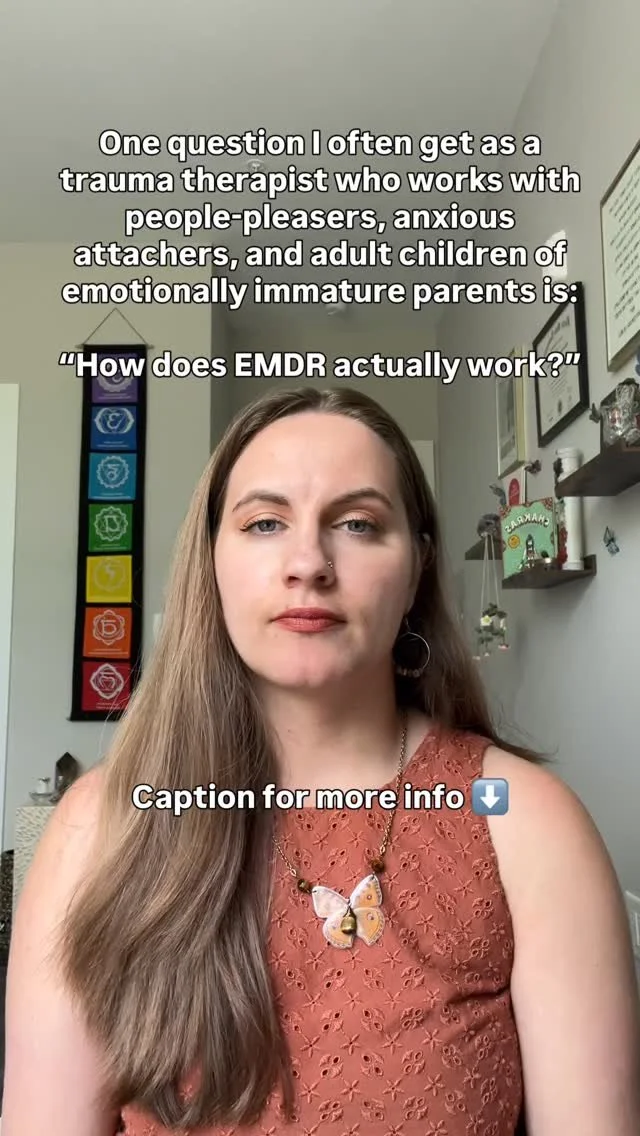
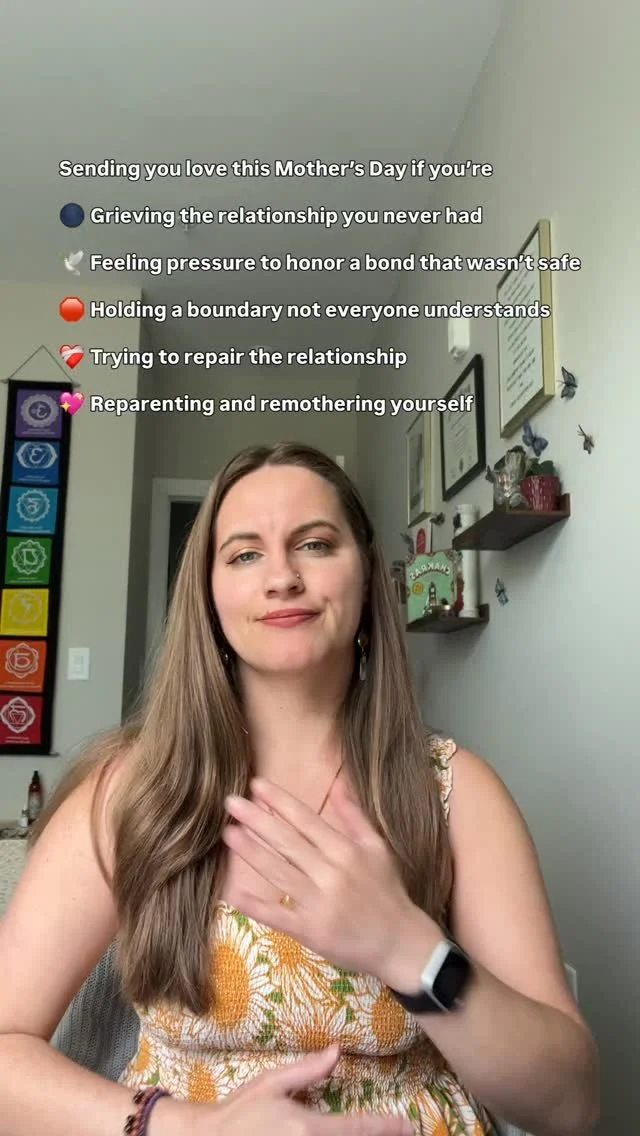
I love to share my insights and invite you to follow along, but keep in mind that Instagram is not a replacement for therapeutic support.